
Human Rights Forum (HRF) was formed in October 1998 with a strong understanding that violation or denial of rights arises in all situations of structured oppression and inequality and the democratic aspirations arising from all such situations, and resistance to such oppression, whether organized or not, whether collective or isolated, are equally important for the Rights movement: theoretically, practically and organizationally.
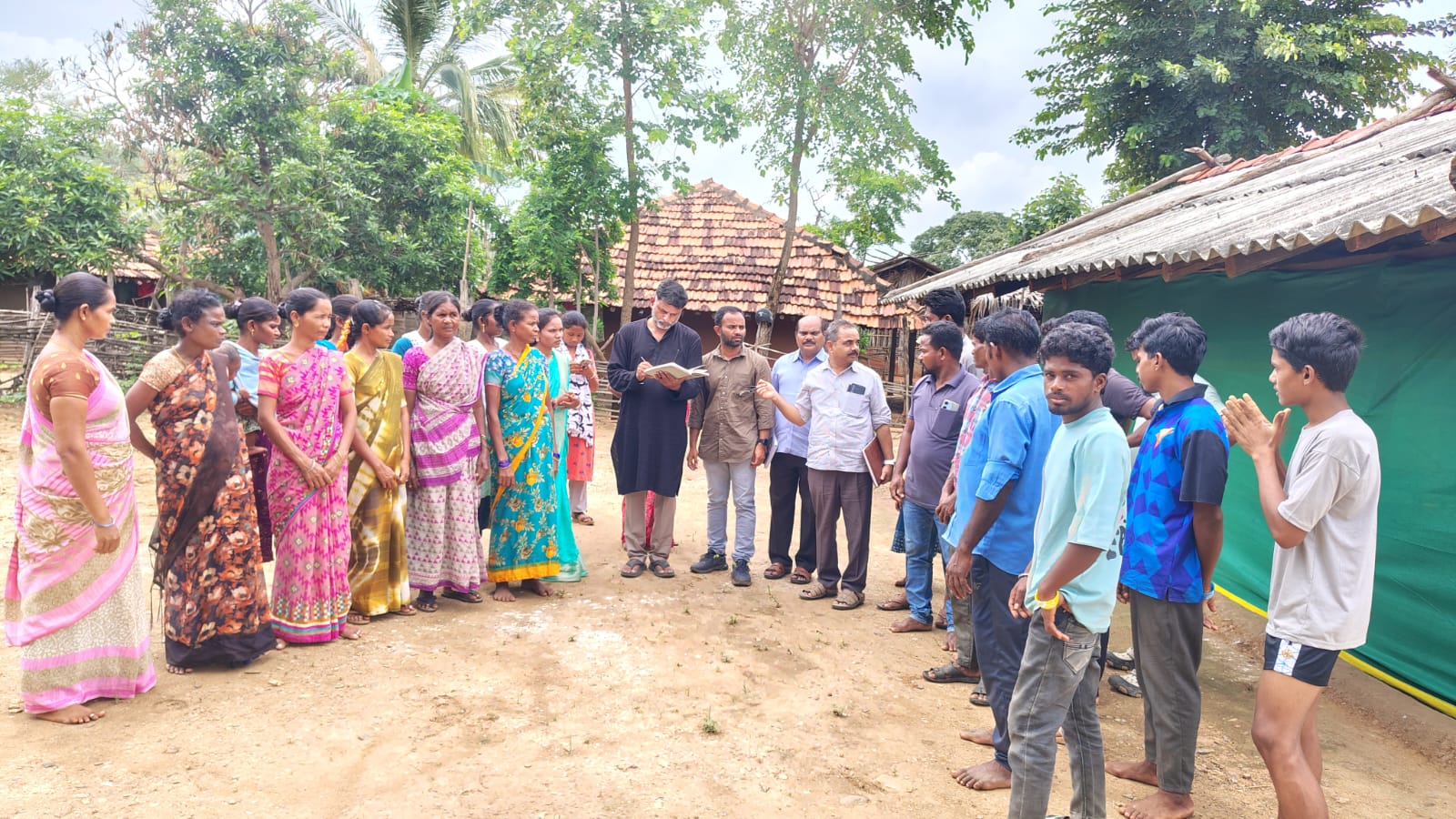
HRF is a non-political and non-funded voluntary organization and responds to issues and concerns all over the country and also outside, but for the present its membership and organization are confined to Andhra Pradesh. HRF takes up rights issues and violations through extensive fact-finding investigations, issuing press statements and media releases, circulating leaflets and other forms of literature, organizing demonstrations, dharnas, peaceful agitations, public meetings, participating in campaigns, making policy interventions, filing representation petitions and legal interventions.
Recent Updates
A commemorative meet in Bharati vidya bhavan,king koti,Hyderabad from 10am on 7th october,2012. For details,
Condolence
Dear friends,
It is with great sadness that we in the Human Rights Forum inform you of the demise of our colleague and friend K Balagopal. He died at a hospital in Hyderabad at about 10 pm on October 8, 2009 due to lung aspiration following a bleeding stomach ulcer. He passed away just 5 days after the HRF successfully held its 3rd State conference at Anantapur. The loss is unbearable and we are all devastated.
We in the HRF thank all friends who have conveyed to us their condolences. In these most difficult times, we rededicate ourselves to rights activism, the work that was so dear to Balagopal for three decades.
(Below is an English version of the pamphlet brought out in Telugu by the HRF on Oct 10, 2009)
Click here for his last report presented as General Secretary of HRF on 3rd October 2009 in Anantapur
Remembering K Balagopal:
A Relentless Crusader for Human Rights
Balagopal, who over the years had become a synonym for the human rights movement in Andhra Pradesh, is no more. He passed away suddenly on 8 October at about 10.00 pm in Hyderabad from lung aspiration following a bleeding stomach ulcer. His death at the age of 57 has left the human rights community and democratic movements in a state of shock. Activists and supporters of the movement are still finding it difficult to accept the reality of his death, even as people in remote villages are mourning the loss of their dear friend, who was always with them in the time of crisis.
It is too soon to make a comprehensive assessment of Balagopal’s life and his three decades of rights activism. That will have to wait another day. This is a small attempt at introducing his life and work. Balagopal was the fifth child of Kandala Parthanatha Sarma and Nagamani. His father’s job in the insurance sector entailed frequent transfers and Balagopal’s education was in several towns of AP, from Nellore to Vizianagaram. After Pre-University education in Kavali and BSc in Tirupati, he took an MSc and PhD in Mathematics from the Regional Engineering College in Warangal before proceeding to Delhi for a post-doctoral at the Indian Statistical Institute. He found the atmosphere there stifling and returned to Warangal in 1981, where he started teaching Maths at the Kakatiya University. This was also the time when he decided on social activism and joined the Andhra Pradesh Civil Liberties Committee.
Balagopal was an exceptionally brilliant student throughout his academic life, and a recipient of several gold medals. While pursuing PhD he became a member of the editorial committee of a renowned international journal of mathematics. His task was to review complex research in mathematics and explain the same to the readers in a simple style. He was also an opening batsman for the cricket team of Venkateswara University. He was equally at ease in the world of poetry and literature and was also respected as a literary critic. Those close to him know that he was quite good at sketching and had even written an illustrated novel at the age of 13.
But all these other ‘gifts’ he left behind in the pursuit of upholding human rights, which was to become his single focus all through his following years. He was elected General Secretary of APCLC in 1983 and carried out that responsibility for 15 years. The early 1980s saw intense repression unleashed by the State on the Naxalite movement in AP where ‘encounters’ were staged to liquidate Naxalites and their supporters. Balagopal travelled extensively to every nook and corner of the State conducting fact-findings into these “extra-judicial executions” and exposing the State’s assault on the Right to Life. He expanded the organisation from its confined location in a few cities to many small towns across the State. There are some districts in Telangana, for example, where he must have visited most villages of each mandal. Inspired by his tireless activism, a number of activists were attracted to the organisation and devoted themselves to similar aims. He proved to be a good teacher in spreading the rights perspective and practice in the muffasil areas by identifying local issues and worked through them with the local activists in a systematic manner. Years of this practice of teaching-by-doing throughout the State meant that wherever a rights violation took place, people would raise their voice against it. ‘Human Rights’ became a household word across the length and breadth of Andhra Pradesh.
The murders of his civil liberties colleagues such as Gopi Rajanna, Dr.Ramanatham, Jaapa Lakshma Reddy and Narra Prabhakar Reddy, did not deter Balagopal from carrying on rights activism. He continued with increased vigour infusing confidence among activists. Even when he was directly subjected to repression, he refused to budge. He was attacked by ABVP activists in 1984 in Karimangar district, kidnapped by the “Praja Bandhu”, a police outfit in Khammam district in 1989, seriously injured in an attack in Kottagudem in 1992 and even got manhandled in the presence of a National Human Rights Commission team in 1993. He refused to be cowed down by these incidents. Arrested under TADA, he spent three months in Warangal prison but made nothing of it saying that it was quite natural that activists would be arrested or imprisoned. When there was a lot of media attention on him following his release by the “Praja Bandhu”, he suggested to journalists that they must focus more on the repression of rural youth, rather than on him.
Balagopal succeeded in raising the APCLC to new heights. With him leading from the front, the organisation became a pioneer in exposing State violence in India, especially in opposing State repression unleashed on the people in the name of containing Naxalism. His untiring efforts in this direction are unparalleled, and made APCLC a widely known and respected organisation nationally and internationally. He worked relentlessly to extend rights activism and practice from the confines of urban intellectual debates onto a much broader arena. When Dalits were attacked during the initial years of the Telugu Desam regime, his was one of the first democratic voices to be raised. During the anti-Mandal agitation he wrote the first analytical essay in support of reservations for backward castes from a rights perspective thereby widening the horizons of the rights movements.
With him at the helm, both the perspective and practice of rights movement flourished to become interdependent: drawing strength from each other as well as contributing towards mutual advancement. For him while the perspective needed to be nourished and modified in the light of practice, practice also needed to be improved upon with changes in perspective. In this process, he came to recognize that denial of rights did not arise solely from class dominance but also arose in the context of many other forms of dominance and oppressive practices therein. He emphasised that all forms of institutionalised dominance impeded enjoyment of rights and thereby cautioned the rights movement about choosing rights violations emerging from a single domain as its priority. He also raised for critical discussion the issue of undemocratic activities of various movements, arguing that a human rights movement need not support every action that other movements do in the name of struggle.
He was of the firm view that there is a lot that the rights movement could learn from every democratic movement being waged against different forms of dominance. He believed that the task of the rights movement is to define the aspirations and demands articulated by these movements in the language of rights so that they attain universal validity. He outlined the tasks of rights movements as follows: working for the implementation of existing rights, struggling for the recognition of non-existent ones, and to cultivate democratic values and culture in the spheres of law, administration, societal thinking and public life. He envisioned a broad based and autonomous rights movement which is accountable to the people. Due to difference of opinion emerging from this vision, he left the APCLC and along with colleagues thinking along similar lines, formed the Human Rights Forum in October 1998. Over the last decade, HRF’s growth from a 32-member organisation to an active and energetic 300-member strong body with presence in every district of the State owes a lot to the untiring efforts of Balagopal. His was a vision of creative alignment of human rights theory with practice and in cultivating among common people a spirit of commitment to social responsibility and faith in democratic values.
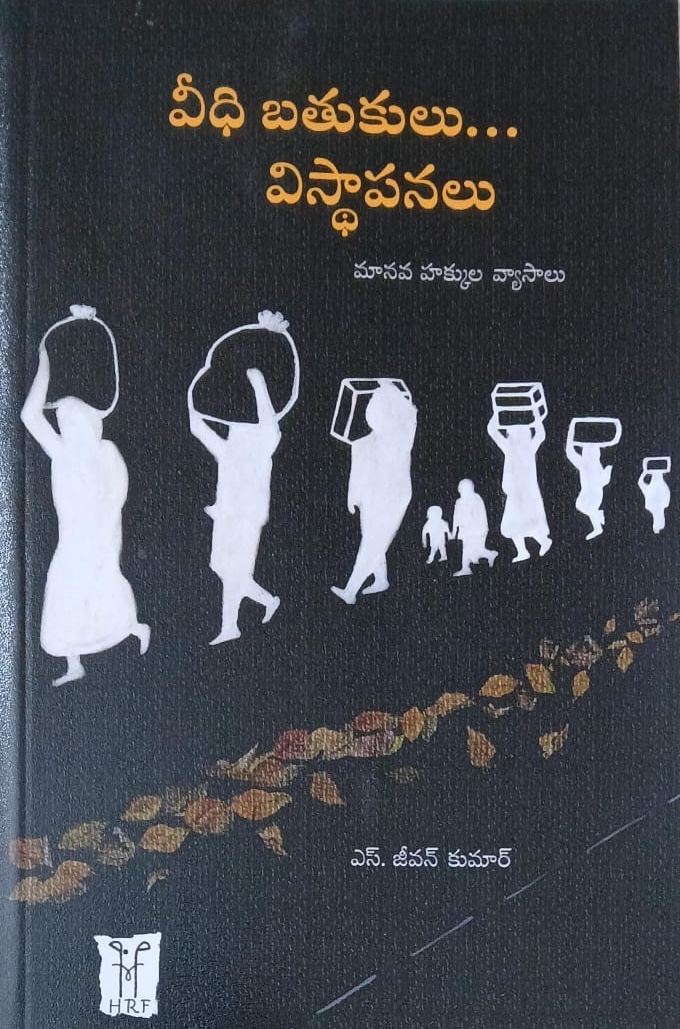
Balagopal wrote numerous analytical commentaries on almost every significant social and political phenomenon in Telugu society. Over the past ten years, all the anonymous essays published in the HRF Human Rights Bulletins were penned by him. His book on D.D.Kosambi, introducing Kosambi’s new thinking on history writing to a Telugu readership, remains a standard textbook for Telugu medium students in History Departments till today. For intellectuals outside Andhra Pradesh, his regular essays in the Economic and Political Weekly remain a most vital source to comprehend the contemporary events in the State. Economists of yesteryears remember his reviews of Cambridge University publications in Economics. His essay on the Chintapalli arson where police burnt over 650 adivasi houses in Visakhapatnam district won the PUCL’s national award for journalism. Along with others, he helped in the formation of the Indian People’s Human Rights Commission to conduct public inquiries into human rights violations all over the country. In a sense, it served as the basis for the establishment of the National Human Rights Commission. Balagopal is well known also in other States which have been sites of major human rights violations in recent times be it neighbouring Karnataka, Tamil Nadu and Kerala or Kashmir, Manipur, Bihar, Gujarat, Chattisgarh, Jharkhand and Orissa. He visited these States several times with activists of other rights organisations and brought out excellent reports.
Despite rising to immense heights in the human rights movement he chose to live a very simple life. He practiced what he believed in his everyday life. For him, there was no life outside of the rights movement. From 1981 till his last breath, he used all his energies and capabilities for protecting the rights of the poor and obtaining them justice. For rural people his name is synonymous with ‘rights’. Intellectuals consider him as a thinker who proposed rights standards to measure the democratic content of any social and political phenomena. He stood out as an intensely committed lawyer in a profession increasingly beset with corruption. He not only provided a moral compass to peoples’ lives but effectively carried out the task of warning them about impending threats to peoples’ interests.
Balagopal was deeply disturbed by the opportunism displayed by intellectuals in the State in the aftermath of Y.S.Rajasekhar Reddy’s death. His caution to HRF activists on the eve of its third State conference on 2-3 October, just days before his death, equally applies to these intellectuals: “This (Human Rights Forum) is a new experiment in the history of peoples’ movements in our State. If we do not sustain it, it is not only a blow to our efforts but to the democratic belief that values can bring people together. If we sustain it and if we successfully take it forward, we would have strengthened the spirit of democracy itself”.
At the end, we recall his own words about Narendranath, the rights activist and HRF member who passed away in July this year that are well suited for him too. ‘Truly extraordinary,’ he described Naren, and recalled Naren’s resolve: “One should not rest as long as people have problems.” We see this as his central message and even as we remind ourselves about it, we invite all of you to work towards such a democratic initiative with his inspiration.
Human Rights Forum
Kakinada Special Economic Zone – Rights Violations
The Human Rights Forum has been actively associated with the struggles of the farmers of Kakinada who are losing their lands to the Kakinada Special Economic Zone, East Godavari District. HRF has been extending solidarity with the Kakinada Special Economic Zone Vyatireka Porata Samithi, besides conducting fact-findings at Kakinada and organizing dharnas along with other groups. HRF also submitted representations to the Chief Secretary, Govt. of Andhra Pradesh and the Chairperson of the Andhra Pradesh State Human Rights Commission.
Representation of HRF to the Chief Secretary
Kashmir: Will The Pain Never End?
Impunity of policing and aimlessness of politics: A report
A Publication of HRF, PDF & APCLC December 2007
Click here to download report in pdf version (716 kB)
Future of the fisher folk of Krishnapatnam?
Violations of the rights of fisherfolk and their environment with regard to the Krishnapatnam Ultra Mega Thermal Plant, Nellore - A Leaflet
A Publication of HRF - February 15, 2008
Click here to download the leaflet